Long ō vowel diphthong
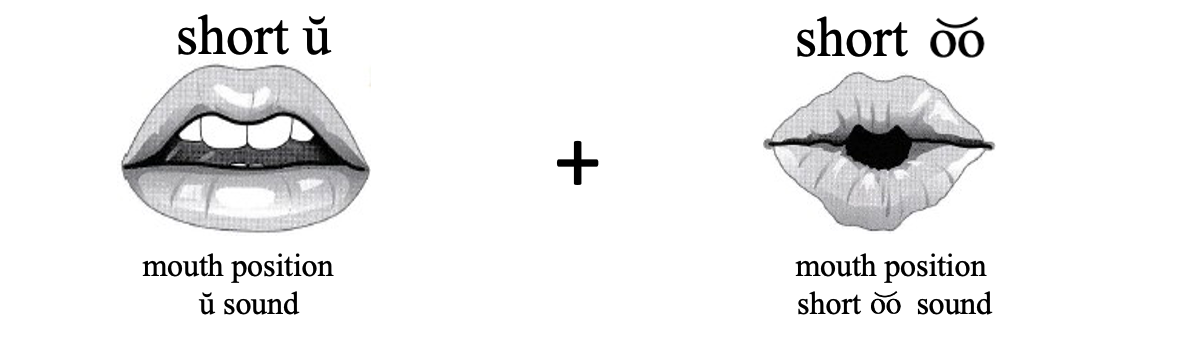
- Practice the ŭ sound
- Close your mouth a little for the short oo sound. As you say it,push your lips forward into a circle (the /w/ shape)
- Because ō is a long sound, hold it a little bit longer
- Listen for the difference between the two sounds, and repeat the ō sound

Pronunciation Tips
- The sound /ow/ is longest and the glide is most noticeable in stressed syllables at the end of a word, as in go or below, or before a voiced consonant, as in phone or goes. It is shorter before a voiceless consonant, as in coat. In an unstressed syllable, there may be no glide at all. Compare road / wrote, close (verb) / close (adjective), robe / rope.
- When one word ends with a vowel sound and the next word begins with a vowel sound, link the two vowels smoothly without a break.
- When the sound /ow/ comes before another vowel sound, use the /w/ sound to link the two vowels together.
Examples [Insert 2 pictures]
Teacher-led Activities:
Practice linking the vowels together with the /ow/ sound:
- There was no answer.
- No, I don’t.
- Do you know everyone?
- Sure, go ahead.
- Is the window open?
- It's so annoying.
- We can't go in
- Is there snow on the ground?
- Joe isn't home.
- No, are you cold?
Which word do you hear?
- I fell in the (hall/hole).
- Could you (saw/sew) this for me?
- Don't drop the (ball/bowl)!
- I (walk/woke) early in the morning.
- Were you (called/cold)?
- Do you know anything about the (cost/coast)?
- caught/coat
- bought/boat
- goat/got
- note/not
- slope/slop
- tot/tote